ADAS calibration
Common ADAS calibration scams, and how to spot them
Your windshield camera decides when your car brakes for you. After a windshield replacement it has to be recalibrated, and that is where a surprising amount of bad practice hides. We calibrate in-house, so we see the aftermath of other people's work often. Here is what to watch for.
- Six things to watch for
- Five questions to ask before you book
- We calibrate other shops' installs too
Six things to watch for
Open any of them. The short version: ask for the report.
"Your car doesn't need calibration"
This is the most common one, and the most expensive to believe.
If there is a camera behind your rear-view mirror looking out through the windshield, your vehicle uses it for lane departure warning, lane keeping, automatic emergency braking or adaptive cruise control. Replacing the glass moves that camera. The manufacturer requires recalibration.
A shop that tells you otherwise is usually telling you they cannot do it. Ask them to put it in writing. Most will suddenly remember that it is needed.
"We'll calibrate it in the parking lot"
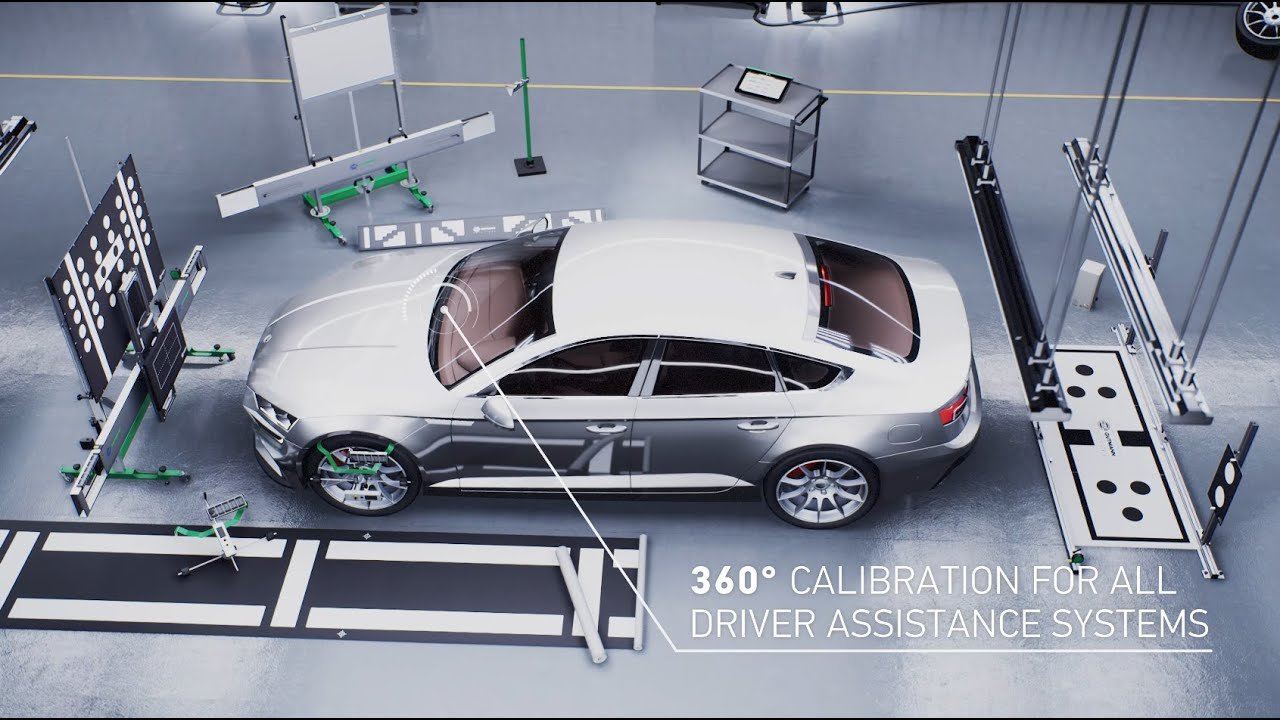
Some vehicles need a static calibration: printed targets placed at measured distances in front of the car, on level ground, with the vehicle at a specified ride height and controlled lighting.
That cannot be done in a parking lot. The ground is not level, the light changes, and there is nowhere to place the targets at the distances the procedure calls for.
Dynamic calibration is different. That one is done by driving the vehicle on well-marked roads and it is perfectly legitimate. The question to ask is which one your vehicle requires. If it needs static and someone offers to do it on your driveway, something is wrong.
"It's calibrated" with no paperwork
A completed calibration produces a report. It shows the vehicle, the procedure, and that it passed.
If nobody offers you documentation, ask for it. If none exists, you have no way of knowing whether the procedure ran, whether it passed, or whether anyone attempted it at all. You also have nothing to show your insurer or the next owner of the car.
The warning light that gets cleared instead of fixed
This is the one that worries us most.
If a calibration does not pass, the correct response is to find out why. Sometimes it is the glass, sometimes a bracket, sometimes something unrelated that was already wrong with the vehicle.
Clearing the fault code makes the dashboard light go away without fixing anything. The car looks fine and the camera is still wrong. You will not know until the day the system is supposed to intervene.
Cheap glass, then a calibration that will not pass
Low-grade aftermarket windshields are sometimes optically different enough from the original that the camera cannot be calibrated through them.
What happens next is predictable: the calibration fails and you are told your car has a fault, or the failure is cleared and ignored. The actual problem is the glass.
This is why we fit OEM or OEE glass only. Saving thirty dollars on a windshield is not worth a camera that cannot see straight.
Charging for calibration that never happened
The blunt version. It appears on the invoice, it was billed to your insurer, and nobody did it.
The defence is simple: ask for the calibration report. A shop that did the work will hand it over without hesitating.
Before you book
Five questions to ask any shop
A shop doing this properly will answer all five without pausing.
- 01
Does my vehicle need calibration, and is it static, dynamic or both?
Any shop doing this properly knows the answer from your year, make, model and trim, and will tell you before you book rather than after.
- 02
Do you do it yourselves, or does the car go somewhere else?
Sublet calibration means two appointments and two companies. It is not wrong, but you should know before you agree to it, not on the day.
- 03
What does it cost, and is it on the same insurance claim?
Ours is $299 to $399 depending on which procedure your vehicle needs, and when it accompanies a covered windshield replacement it goes on the same claim.
- 04
Will I get documentation showing it passed?
If the answer is anything other than a straight yes, that is your answer.
- 05
What happens if it does not pass?
The right answer is that they find out why. The wrong answer is that they clear the code.
If the answers come slowly, that is information too.
What we do
Calibration in-house, not sublet
We calibrate in Fairfax, static and dynamic, and it adds 45 to 90 minutes to the job rather than a second appointment somewhere else.
Calibration runs $299 to $399 depending on which procedure your vehicle requires. When it accompanies a windshield replacement it normally goes on the same insurance claim, and we include it rather than leaving you to arrange it.
You get the report
Documentation showing it completed and passed, for your records, your insurer or the next owner of the vehicle. If it does not pass, we tell you and we find out why.
We calibrate other shops' work
If your glass was replaced somewhere that could not calibrate, bring the car to us. It is a common job and no different from calibrating our own work.
Services
What else we do
Camera on your windshield? Ask for the report.
We calibrate in-house in Fairfax, including on glass other shops installed.
